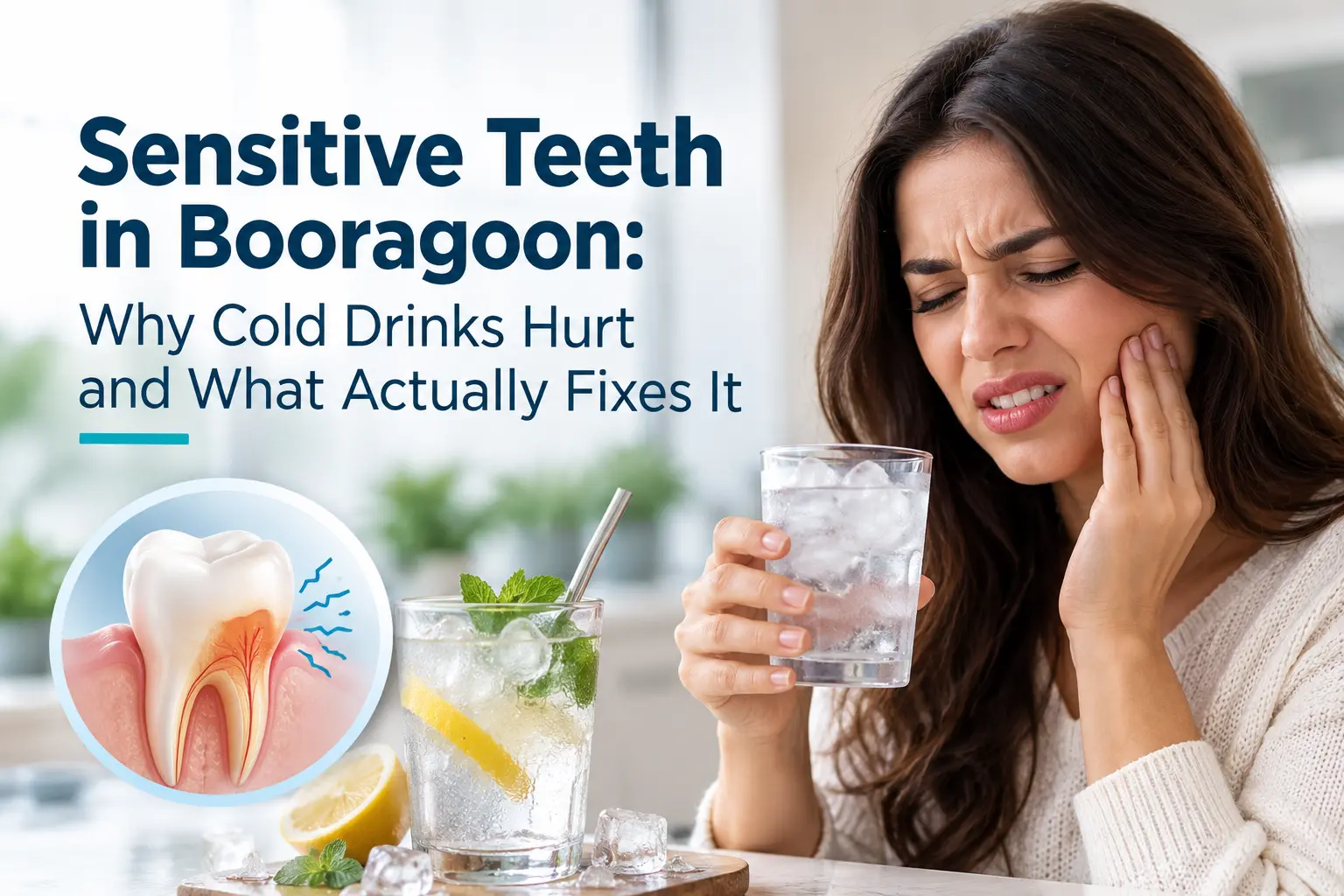
You know the moment. The iced coffee, the cold water at the end of a run, the first bite of ice cream, and then that electric zing through one tooth that makes you chew on the other side for the rest of the week. Perth’s warm months are arriving, cold drinks are about to be everywhere, and if your teeth flinch at them, this is the guide to why it happens and, more usefully, which fix matches your particular cause.
Sensitivity is one of the most common complaints in Australian dentistry, and one of the most under-treated, because most people assume it is just how their teeth are. It almost never is. The sensitive teeth Booragoon patients describe to us nearly always trace to a specific, findable cause with a specific, effective fix, and matching the two correctly is the whole game.
Teeth already wincing at this weather? Book your appointment today or call 08 9332 3608.
The Short Answer
Teeth zing at cold when the dentine, the layer beneath the enamel, loses its covering. Dentine is threaded with thousands of microscopic fluid-filled tubules running toward the tooth’s nerve; when cold hits exposed dentine, the fluid shifts sharply, and the nerve reads that movement as a jolt of pain. Dentists call it dentine hypersensitivity, and Cleveland Clinic’s guide to teeth sensitivity lists the same core causes we see daily: gum recession, enamel wear, grinding, whitening, cracked teeth, and decay. The fix depends entirely on which of those uncovered your dentine, which is why one universal remedy does not exist.
Cause One: Receding Gums (the Most Common Culprit)
Tooth roots have no enamel at all; nature assumed gum would always cover them. When gums recede, whether from years of hard scrubbing, from gum disease, or simply with age, the exposed root surface conducts cold straight toward the nerve. The tell-tale sign is sensitivity concentrated at the gum line, often on the canines and premolars where brushing pressure lands hardest. The fix ladder: switch to a soft brush and lighter technique so recession stops progressing, use a desensitising toothpaste correctly, and for stubborn spots, we can apply fluoride varnish or bond a thin tooth-coloured filling over the exposed root to seal the tubules physically.
Cause Two: Enamel Worn Thin by Acid or Force
Enamel does not grow back. Frequent soft drinks, citrus, wine, and reflux all soften it chemically; aggressive brushing and night-time grinding remove it mechanically, and grinding concentrates the damage on chewing surfaces. If your sensitivity is broad rather than one spot, and your teeth look flatter, shorter, or more yellow than they used to, wear is the likely story. The fix: cut the acid frequency, wait half an hour after acidic drinks before brushing, and if grinding is in the picture, a custom night splint stops the nightly sanding. Worn surfaces that have gone too far can be rebuilt with bonded restorations.
Cause Three: Whitening, Fillings, and Other Recent Dentistry
Sensitivity that follows teeth whitening, a new filling, or a deep clean is usually the nerve grumbling temporarily, and it settles within days to a few weeks. This is the one sensitivity that genuinely can be waited out, and Johns Hopkins’ sensitive teeth guidance describes the same pattern. Two caveats: whitening sensitivity is managed far better with professional products and a dentist adjusting concentrations than with repeated chemist kits, and post-filling sensitivity that lasts beyond a month, or hurts on biting, needs a review rather than more patience.
Cause Four: Decay and Leaky Old Fillings
Not every zing is innocent dentine. A small cavity, or an old filling whose edges have started to leak, lets cold reach the inner tooth through a route that will only widen. The clue is location: sensitivity from recession and wear tends to involve several teeth or a whole side, while decay usually nominates one specific tooth and slowly raises its voice. Sweet triggering the same tooth as cold strengthens the suspicion. This cause has no home remedy; the fix is a simple filling now rather than a root canal later, and it is the single best reason not to self-diagnose sensitivity for months on end.
The Red Flag: When It Is Not Sensitivity at All
Here is the distinction that matters most in this article. Classic sensitivity is a short, sharp zing that stops within seconds of the trigger leaving. Pain that lingers for minutes after cold, throbs on its own, wakes you at night, or stabs when you bite is not hypersensitivity; it points to decay reaching the nerve, a dying nerve, or a cracked tooth, and each of those gets worse with waiting. The same goes for sensitivity that suddenly appears in one specific tooth after years of nothing. Book those promptly; they belong on our dental fillings and assessment side of the practice, not the toothpaste aisle.
Using Desensitising Toothpaste So It Actually Works
Most people use desensitising toothpaste wrong and conclude it fails. The active ingredients need contact time and consistency: brush with it twice daily as your regular paste, spit but do not rinse afterwards so a working film stays on the teeth overnight, and give it a full four to six weeks before judging. For a stubborn single spot, rubbing a pea of paste directly onto the area at bedtime helps. It manages symptoms rather than causes, so pair it with fixing whatever exposed the dentine, but used properly, it is genuinely effective for most mild to moderate cases. Three summer habits help alongside it: drink acidic and icy drinks through a straw so they bypass the sensitive zones, follow them with a swish of plain water, and chew sugar-free gum afterwards to boost saliva, which is the mouth’s own repair fluid.
Help for Sensitive Teeth Booragoon Locals Can Reach in Minutes
Booragoon sits just up Leach Highway from our chairs, an easy stop on a Garden City run. A sensitivity assessment slots into a routine check-up and clean: we map which teeth react and to what, check gum levels, wear patterns, cracks, and old fillings, then match the fix to the cause, from in-chair fluoride varnish to bonding over exposed roots to a splint for grinders. Most patients are surprised by how quickly targeted treatment works after years of just putting up with it; our guide to what a dental check-up includes shows how the assessment fits into a normal visit. Health fund extras typically rebate the preventive items involved, and HICAPS claims are processed on the spot. Cold drinks are the good part of a Perth summer; wincing at them is optional.
Frequently Asked Questions
Why do cold drinks hurt my teeth?
Because dentine, the layer under your enamel, has become exposed, usually by receding gums or worn enamel. Cold shifts the fluid inside dentine’s microscopic tubules, and the tooth’s nerve reads that movement as a sharp zing. Identifying what exposed the dentine determines the right fix.
Can sensitive teeth go away on their own?
Only when recent dental work like whitening or a new filling caused temporary nerve irritation, which settles within days to a few weeks. Sensitivity from recession, enamel wear, cracks, or decay persists until the cause is treated, and decay-related pain worsens with waiting.
Does desensitising toothpaste really work?
Yes, for mild to moderate sensitivity, if used correctly: twice daily, spit without rinsing, for at least four to six weeks. It calms symptoms rather than causes, so pair it with treating whatever exposed the dentine in the first place.
When is a sensitive tooth something serious?
When pain lingers minutes after the trigger, throbs spontaneously, wakes you at night, or occurs on biting. Those patterns suggest deep decay, a dying nerve, or a crack rather than simple sensitivity, and they need prompt assessment rather than desensitising toothpaste.
Stop Wincing at Cold Drinks
Bull Creek Dental, 1/79 Wheatley Dr, Bull Creek WA 6149, Australia | Get Directions
Phone: 08 9332 3608 | Book an Appointment | Contact Us
Open six days a week, with Thursday evening appointments, complimentary on-site parking, and on-the-spot HICAPS health fund claiming.