You’ve been told you grind your teeth — maybe by your partner, maybe by your dentist spotting flattened edges at a check-up. The chemist sells a boil-and-bite night guard for under fifty dollars. A custom dental splint from the dentist costs considerably more. Same job, surely? Not quite — and the difference matters, because the wrong device can protect your teeth poorly and, for some people, make night-time clenching worse.
At Bull Creek Dental, we fit custom occlusal splints for patients across Brentwood and surrounding suburbs. Here’s an honest comparison of what each option actually does, so you can decide with your eyes open.
Suspect you’re grinding? Book your appointment today or call 08 9332 3608 for an assessment.
First: How Do You Know You Grind at Night?
Most people with sleep bruxism have no idea they do it. The evidence shows up indirectly: waking with a tired or stiff jaw, morning headaches around the temples, teeth that look flatter or shorter, chipped enamel, unexplained cracked fillings, tooth sensitivity, scalloped tongue edges — or a partner who can hear the grinding. Healthdirect’s teeth grinding guide lists stress, sleep disorders, caffeine and some medications among common contributors. A dentist can usually confirm bruxism in minutes from the wear pattern on your teeth.
What a Chemist Boil-and-Bite Guard Actually Is
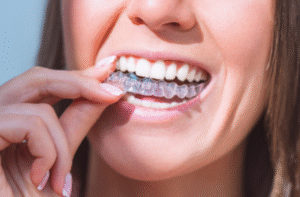
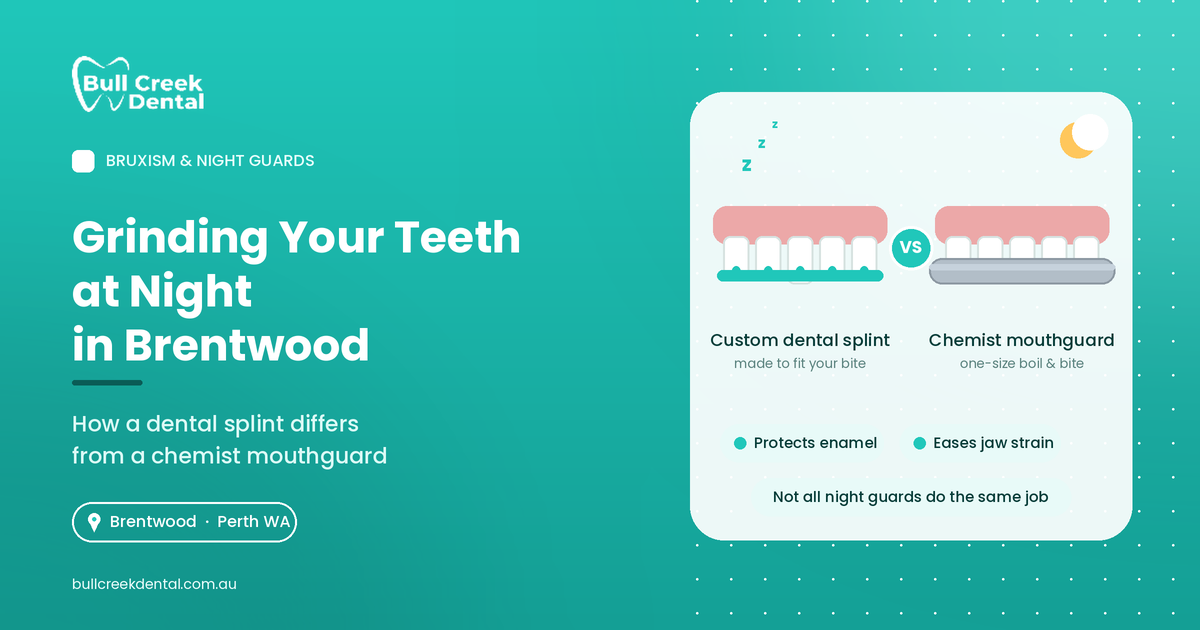
A boil-and-bite guard is a one-size-fits-most shell of soft thermoplastic. You soften it in hot water, bite into it, and it holds a rough impression of your teeth. As a short-term buffer it’s better than nothing — it puts a layer between your upper and lower teeth. But its limitations are structural, not a matter of brand:
- Soft, chewy material: for many grinders, a squashy surface triggers more chewing and clenching, not less — the jaw treats it like something to work on
- Bulky and loose: the imprecise fit makes guards bulky, prone to falling out overnight, and uncomfortable enough that many end up on the bedside table within weeks
- Uneven bite: nothing balances how your teeth meet on the guard, so grinding forces concentrate on a few contact points instead of spreading evenly
- Short lifespan: heavy grinders chew through soft guards in months, and replacing them repeatedly narrows the price gap you started with
What Makes a Custom Occlusal Splint Different
A custom splint is made from precise impressions or digital scans of your teeth and crafted in hard, durable acrylic — typically for the upper jaw. The differences are exactly where they matter:
- Hard, smooth surface that gives the jaw nothing to chew into — grinding forces slide rather than grip, and muscle activity tends to settle rather than escalate
- Precise, retentive fit that stays put all night and is slim enough to sleep in comfortably
- A balanced bite, adjusted in the chair so your jaw closes evenly on the splint — protecting not just tooth surfaces but the jaw joint and muscles, which is why splints are also central to TMJ treatment
- Protection for your dental work — crowns, veneers and large fillings are exactly what cracks first under untreated grinding, and a splint is far cheaper than remaking them
- Years of lifespan — a well-made splint commonly lasts 3 to 5 years or more, reviewed at your regular check-ups
The Real Cost Comparison
Over five years, a heavy grinder might buy six or more chemist guards while still accumulating tooth wear — then pay for the cracked filling or crown the guard didn’t prevent. A single custom splint over the same period, often partly rebated by health fund extras cover and claimable on the spot via HICAPS, is frequently the cheaper path as well as the better-protected one. If cash flow is the barrier, our payment plan options can spread the cost.
What Getting a Custom Splint Involves
The process is simpler than most people expect. At the first visit, we confirm the diagnosis from your wear pattern, check your jaw joints and muscles, and take precise impressions or a digital scan of your teeth — no gagging trays required with scanning. A dental laboratory then crafts your splint in hard acrylic. At the fit appointment, usually a week or two later, we seat the splint, check its retention, and — the step no chemist guard gets — adjust the biting surface with articulating paper until your jaw closes evenly across it. You’ll wear it nightly, bring it to your regular check-ups for review, and clean it each morning with a soft brush and cool water. Most patients adapt within a few nights and soon report they sleep worse without it than with it.
Beyond the Splint: Managing What’s Driving the Grinding
A splint protects your teeth from grinding — it doesn’t always stop the grinding itself, so it pays to address the drivers. Stress is the big one: bruxism commonly tracks periods of pressure at work or home, and anything that genuinely lowers your stress load tends to quieten the jaw. Caffeine late in the day, alcohol close to bedtime and smoking are all associated with more grinding. Poor or fragmented sleep matters too — and in some patients, grinding clusters with snoring and obstructive sleep apnoea, which is worth raising if your partner reports both sounds; our snoring and sleep apnoea page covers how we assess that. Finally, persistent jaw pain or morning headaches alongside grinding deserves a proper joint and muscle assessment, not just a barrier between the teeth.
When a Chemist Guard Is Fine — and When It Isn’t
Fair is fair: a boil-and-bite guard is a reasonable stopgap for a few weeks — say, while a custom splint is being made, or during a known short stress period. Where it falls short is as a long-term solution for confirmed bruxism, for anyone with crowns or veneers to protect, or for anyone whose grinding comes with jaw pain or headaches — those symptoms need assessment, not just a barrier. And a note for parents: children’s grinding is a different topic with different advice — we’ve covered it separately in our guide to why children grind their teeth.
Our Brentwood patients are just minutes from the practice — open six days a week with complimentary parking at the door.
One last distinction that trips people up: a night splint is not a sports mouthguard, and neither substitutes for the other. A sports mouthguard is deliberately thick and shock-absorbing to protect against impact; a night splint is slim and hard to manage grinding forces. Wearing a sports guard to bed brings back the soft-and-chewy problem, and wearing a night splint to footy offers little impact protection. If you need both — plenty of weekend athletes who grind do — they are two separate custom appliances, and both can usually attract a health fund rebate.
Waking with a tired jaw or spotting chips in your teeth? Book your appointment today, contact us online or call 08 9332 3608.
Frequently Asked Questions
Is a chemist night guard as good as a custom one?
No. Boil-and-bite guards are soft, bulky and unbalanced, and for some grinders the chewy material increases clenching. A custom hard-acrylic splint fits precisely, balances your bite, protects dental work and lasts years — boil-and-bite guards suit only short-term, stopgap use.
How do you know if you grind your teeth at night?
Common signs are waking with a stiff jaw or temple headaches, flattened or chipped teeth, new sensitivity, cracked fillings, or a partner hearing the grinding. A dentist can confirm bruxism from the wear pattern on your teeth, usually at a routine check-up.
Can teeth grinding crack a filling or crown?
Yes — grinding generates chewing-level forces for hours each night, and large fillings, crowns and veneers are often the first casualties. A custom splint absorbs those forces and typically costs far less than replacing broken dental work.
How long does a custom night splint last?
Usually 3 to 5 years, often longer, depending on grinding intensity. We check its fit and wear at your regular check-ups and adjust it as needed — something a disposable night guard can’t offer.