Ask three clinics how long a dental implant lasts, and you will hear “a lifetime” three times. It is a half-truth. The titanium fixture in the bone genuinely can last for decades; the crown screwed onto it usually cannot, and a small percentage of implants fail for reasons that are largely predictable in advance. If you are weighing up dental implants as a Leeming patient, you deserve the full picture before you invest, not the brochure version.
This guide separates the implant from the crown, names the real failure causes that published research keeps finding, and explains what you can control. We wrote about implant options for this area before in our Willetton implants guide; this article goes deeper into the one question that matters most over a 20-year horizon: durability.
Considering an implant and want a straight answer for your own case? Book your appointment today or call 08 9332 3608.
The Short Answer
Well-planned, well-maintained implants survive at rates of roughly 90 to 95 per cent over ten years, and many go on for decades; Healthline’s review of the research summarises the same figures. The crown on top is a different story: like any dental crown, it wears, chips, and typically needs replacing after 10 to 15 years or so. Budgeting for an implant means budgeting for a permanent foundation plus a replaceable top. Clinics that quote “lifetime” without that distinction are selling the fixture and staying quiet about the crown.
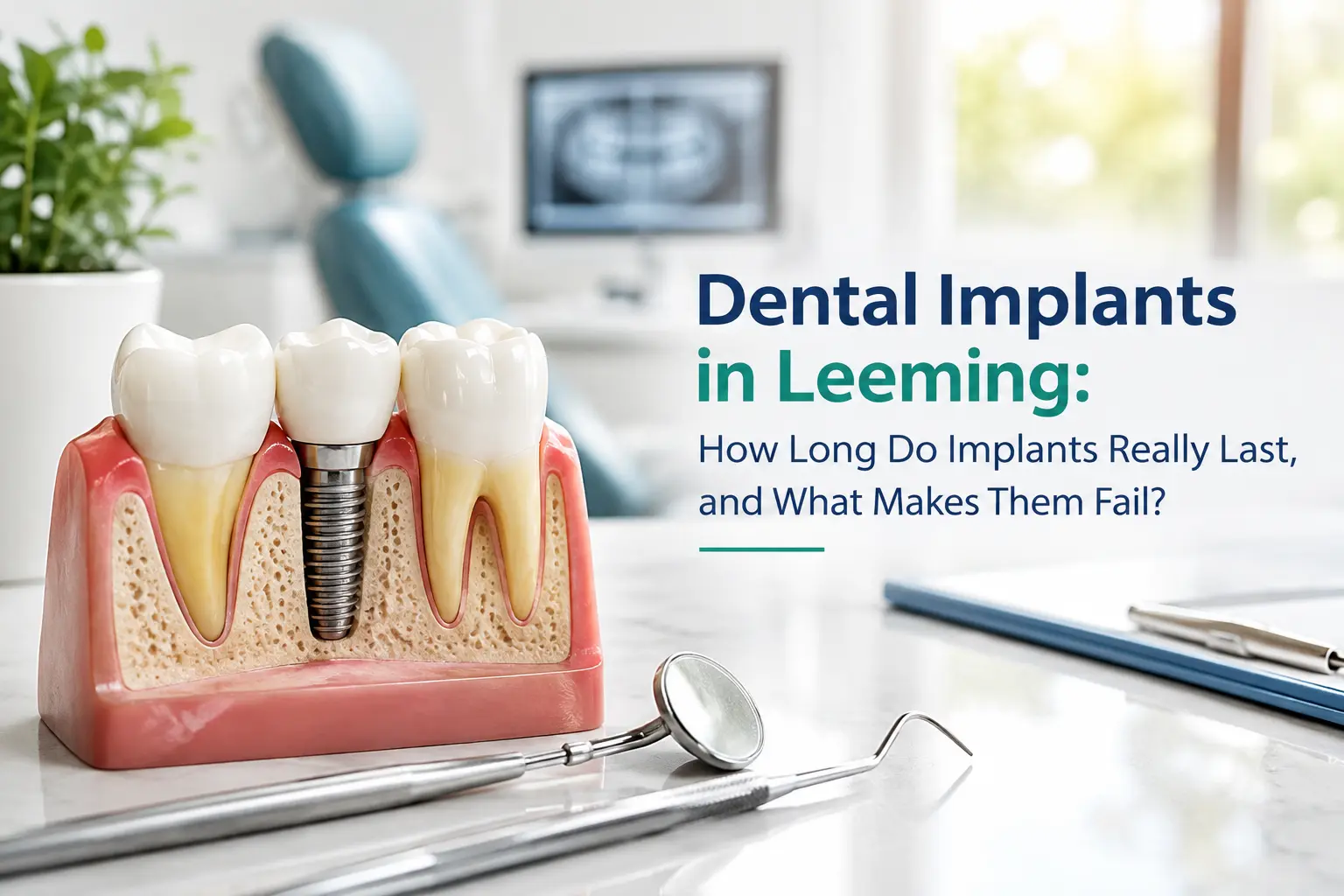
An Implant Is Three Parts, and They Age Differently
- The fixture is the titanium screw placed in the jawbone. Bone fuses to it through a process called osseointegration; once fused, it is the most durable part of the system and the part that can genuinely last a lifetime.
- The abutment is the connector between fixture and crown. It rarely causes trouble, though screws can occasionally loosen and need retightening at a check-up.
- The crown does the chewing, takes the wear, and shows the age. Replacing a worn implant crown is routine and far simpler than the original surgery; the fixture stays untouched.
What Actually Makes Implants Fail
Published implant research is unusually consistent about the culprits. A recent eight-year clinical study of single implants found the strongest predictors of failure were peri-implantitis, smoking, bruxism, uncontrolled diabetes, and failed osseointegration. In plain language:
- Peri-implantitis, gum disease around an implant, is failure cause number one. Implants cannot decay, but the gum and bone around them can become infected exactly as they can around natural teeth, and an implant with failing bone support eventually loosens. This is why our gum disease treatment and maintenance programme matters as much after implant treatment as the surgery itself.
- Smoking roughly doubles trouble at every stage: it impairs the initial bone healing and keeps starving the gums of blood supply for as long as you smoke. We will always tell you this honestly rather than discover it together later.
- Night-time grinding overloads implants, which lack the shock-absorbing ligament natural teeth enjoy. If you grind, a custom night splint is cheap insurance for an expensive investment.
- Uncontrolled diabetes slows healing and raises infection risk. Well-controlled diabetes, by contrast, is compatible with excellent implant outcomes; the distinction is control, not the diagnosis.
- Failed integration accounts for most early failures: the bone simply does not fuse, usually within the first few months. Careful case selection, adequate bone volume, and undisturbed healing keep this rare, and bone grafting can rebuild volume where it is lacking before the implant goes in.
How to Make Yours Last Decades
The controllable factors are refreshingly ordinary. Clean the implant like a natural tooth, including under the crown edges where floss or interdental brushes reach; keep your regular check-up and clean appointments so we can measure the gum around the implant and catch peri-implantitis while it is still reversible; wear your splint if you grind; and if you smoke, quitting before surgery measurably improves your odds. None of this is exotic. Implants fail slowly and visibly to a dentist who is monitoring them, which is exactly why the maintenance visits are not optional extras. Between visits, three signs deserve a prompt phone call rather than a wait: bleeding or tenderness in the gum around the implant, food packing repeatedly beside it, or any sense of movement in the crown. Each is easily investigated and usually easily fixed when reported early; each becomes expensive when ignored for a year.
Implant, Bridge, or Nothing: The Durability Comparison
Durability only means something against the alternatives. A dental bridge replaces the gap by crowning the two neighbouring teeth and suspending a false tooth between them; it works well, but it typically lasts 10 to 15 years, it makes the health of three teeth depend on the weakest of them, and it requires grinding down two neighbours that may be perfectly healthy. Doing nothing is the most expensive option in slow motion: the jawbone under an empty gap begins shrinking within months, neighbouring teeth drift, and the opposing tooth over-erupts, so the space becomes harder and costlier to restore with every passing year. An implant is the only option that protects the bone, spares the neighbours, and can outlast both alternatives; that is why it usually wins the 20-year comparison despite the higher entry price.
Is an Implant Still Worth It Later in Life?
Frequently, yes. Age itself is not a barrier; the research consistently finds that health factors, not birthdays, predict implant success, and the Australian Dental Association’s consumer guidance at teeth.org.au treats implants as an option for healthy adults generally, not an age bracket. A 70-year-old with sound bone, healthy gums, and controlled blood pressure is often a better candidate than a 45-year-old smoker with untreated gum disease. What changes with age is the value calculation, and even there implants tend to win: a stable, fixed tooth that lets you chew properly for 15 or 20 years is one of the better purchases retirement money can make.
Dental Implants Leeming Patients Can Rely On for the Long Haul
Our implant process is built around the failure research above. Before anything is placed, we assess your bone volume, gum health, bite forces, and medical picture; we treat gum disease first, plan single implants or larger cases on proper imaging, and schedule the maintenance programme that protects the result. You will get a written quote with item numbers for your health fund, and payment plan options can spread the cost. Leeming patients are minutes away; we are open six days a week, and implant reviews fold into your normal check-ups rather than demanding extra visits.
Frequently Asked Questions
How long do dental implants really last?
The titanium fixture in the bone can last for decades, with 10-year survival rates of roughly 90 to 95 per cent in published studies. The crown on top typically needs replacement after 10 to 15 years of chewing wear, which is a routine procedure that leaves the fixture untouched.
What causes dental implants to fail?
Research consistently names five predictors: peri-implantitis (gum disease around the implant), smoking, night-time grinding, uncontrolled diabetes, and failed early bone integration. Most are preventable or manageable with good hygiene, regular monitoring, a night splint for grinders, and honest pre-treatment planning.
Can you get gum disease around an implant?
Yes; it is called peri-implantitis, and it is the leading cause of late implant failure. Implants cannot decay, but the bone and gum holding them can become infected, so implants need the same daily cleaning and professional maintenance as natural teeth.
Am I too old for a dental implant?
Almost certainly not. Studies show health factors predict implant success, not age. Healthy gums, adequate bone, and well-controlled general health matter far more than the number on your birthday cake, and we assess all three before recommending treatment.
Talk to Us About a Tooth That Lasts
Bull Creek Dental, 1/79 Wheatley Dr, Bull Creek WA 6149, Australia | Get Directions
Phone: 08 9332 3608 | Book an Appointment | Contact Us
Open six days a week, with Thursday evening appointments, complimentary on-site parking, and on-the-spot HICAPS health fund claiming.