Every heavily filled back tooth is on a journey, and most patients never hear the itinerary. A small filling becomes a bigger one, the bigger one gets patched at its edges, then a corner of the tooth breaks off a decade later over something as innocent as a bread roll. Somewhere along that road there is a point where another filling stops being repair and starts being wishful thinking, and knowing where that point sits can save you a tooth.
This guide explains the honest threshold between a filling and a crown: the five situations where dental crowns genuinely earn their higher price, the situations where a filling remains the right call, and the economics of each over a ten-year horizon. Mount Pleasant patients ask us this question weekly, usually while looking at an X-ray of a tooth that is more filling than tooth, so here is the reasoning in full.
Got a tooth that keeps breaking? Book your appointment today or call 08 9332 3608.
The Short Answer
A filling repairs a hole; a crown holds a tooth together. Fillings are the right choice while the tooth still has enough sound structure to support them; a crown becomes the right choice when so much natural tooth has been lost to decay, fracture, or previous dentistry that the remaining walls can no longer take chewing forces alone. The Australian Dental Association’s consumer guidance at teeth.org.au describes crowns exactly this way: a cap that restores a tooth too damaged for a filling. The skill is judging that boundary honestly, in both directions.
The Five Signs a Tooth Has Outgrown Fillings
- 1. The filling is most of the tooth. Once a filling occupies roughly half the tooth or more, the surrounding walls become thin cusps of enamel doing structural work they were never designed for. Each replacement filling enlarges the cavity further; at some point, the honest fix is to stop hollowing and start reinforcing.
- 2. A cusp has cracked or broken away. A broken corner on a back tooth is the tooth announcing that its walls are failing. Patching the corner treats the symptom; a crown wraps the whole tooth and stops the next corner from going the same way.
- 3. The tooth has had root canal treatment. A back tooth that has been through root canal therapy is hollowed and more brittle, and research is consistent that crowning these teeth dramatically improves their survival. Skipping the crown to save money is the classic false economy: the fracture that follows can make the whole investment unsalvageable.
- 4. Cracks keep announcing themselves. Pain on biting, sensitivity that comes and goes, and visible craze lines around an old filling suggest a tooth that is flexing. A crown splints the structure together before a crack dives below the gum, where the conversation changes to extraction.
- 5. Heavy grinding is wearing the tooth down. Grinders break restorations that would last anyone else a decade. Sometimes the answer is a crown in a stronger material; often it is a crown plus a night splint so the new work is protected from the force that destroyed the old.
When a Filling Is Still the Right Call
Fairness cuts both ways. A small to medium cavity in a tooth with solid walls needs a filling, not a crown, and crowning it would sacrifice healthy structure for no benefit; modern bonded fillings are excellent within their limits. Front teeth with minor chips often suit bonding or veneers rather than full crowns. And a tooth with a hopeless prognosis, cracked below the bone or barely supported, deserves an honest conversation about extraction and replacement rather than an expensive crown destined to fail. If we recommend a crown at our practice, it is because the tooth sits in that middle territory where reinforcement genuinely changes its future, and we will show you the reasoning on the X-ray, not just the price.
The Ten-Year Economics: Repeat Fillings vs One Crown
A crown costs several times more than a filling on the day, which is where most patients’ maths stops. Run it over ten years instead. The failing tooth pattern is a filling now, a larger replacement in three or four years, an emergency visit for a broken cusp somewhere in between, and, if a crack runs deep, root canal treatment or extraction at the end, each step with its own bill and its own appointment. A well-made crown on the right tooth typically lasts 10 to 15 years and often well beyond, turning that sequence into one procedure and routine check-ups. Health funds recognise crowns under major dental, so part of the cost usually comes back through your extras cover, claimable on the spot with HICAPS, and our payment plan options can spread the remainder. Expensive and cheap depend entirely on the length of the ledger.
What Getting a Crown Involves
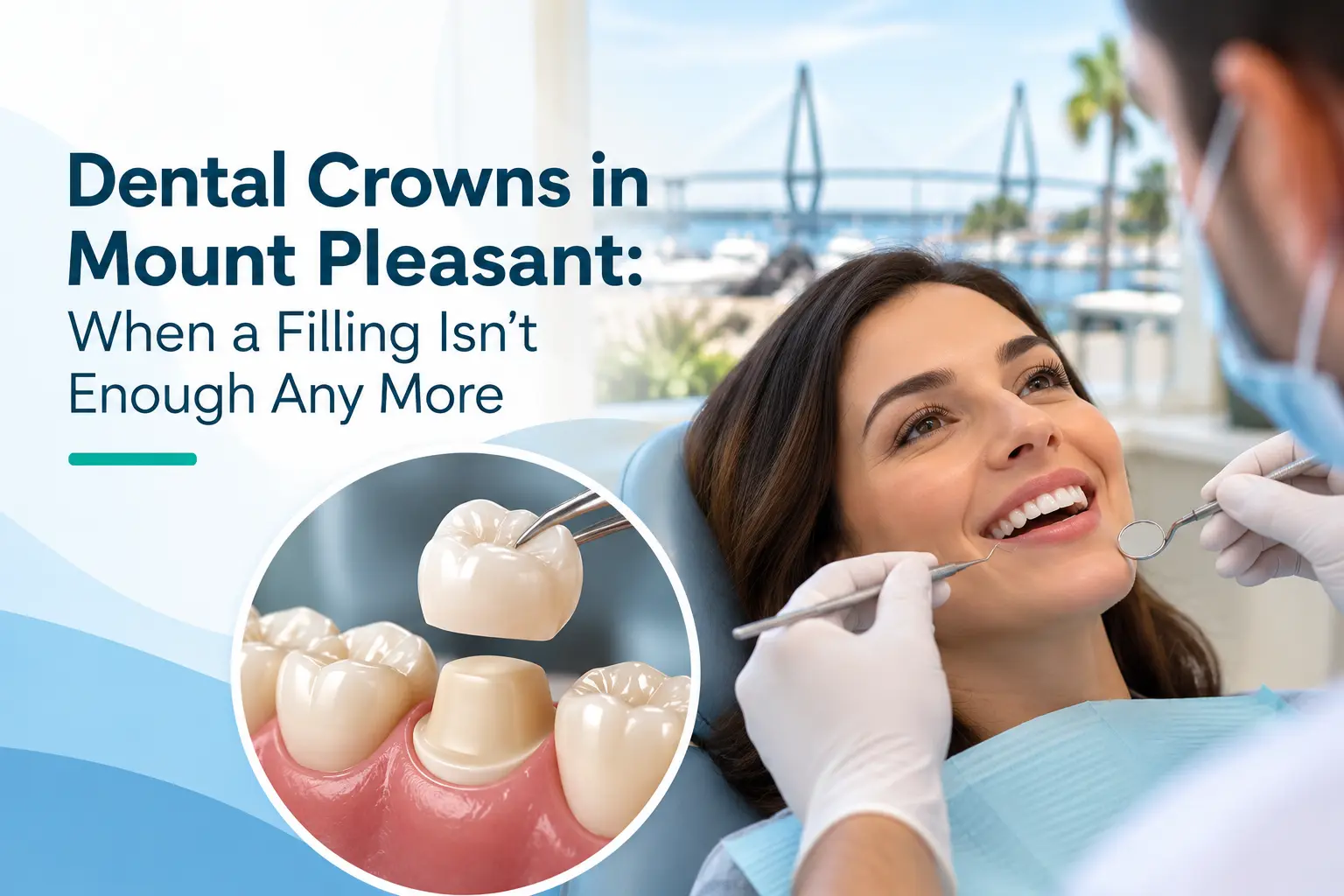
Two visits, usually a fortnight apart. At the first, the tooth is shaped, a precise digital scan or impression is taken, the shade is matched to your neighbouring teeth, and a temporary crown protects the tooth while a dental laboratory crafts the final one, most often in porcelain that is colour-matched well enough that visitors will never pick it. At the second visit, the temporary comes off, the new crown is tried, adjusted until your bite feels completely natural, and cemented. After that, a crowned tooth lives like any other: brush it, floss around it, and let us keep an eye on its margins at your routine check-ups. For how long crowns and other restorations last in real mouths, our earlier guide on how long cosmetic dentistry results last in Mount Pleasant covers the full picture, and Healthdirect offers independent general guidance on restorative treatment options.
Dental Crowns Mount Pleasant Patients Can Trust
Our approach is simple: we crown teeth that need crowns, fill teeth that need fillings, and show you which is which on the screen in front of you. You will see the amount of remaining natural tooth, any crack lines we are worried about, and the specific reason a filling would or would not survive; then you will get a written quote with item numbers for your health fund before anything begins. Mount Pleasant is minutes from our chairs; if one tooth in your mouth keeps breaking, book it in before it chooses its own timing, because teeth always pick the long weekend. A missing tooth conversation is also never the end of the road, and our dental bridge page covers one of the paths back if a tooth has already been lost.
Frequently Asked Questions
When is a crown needed instead of a filling?
When the tooth no longer has enough sound structure to support a filling: the filling would occupy half the tooth or more, a cusp has broken, cracks are causing bite pain, or the tooth has had root canal treatment. Fillings remain correct for small to medium cavities in structurally sound teeth.
How long do dental crowns last?
Typically 10 to 15 years, and often considerably longer with good hygiene and regular check-ups. Heavy grinding shortens the life of any restoration, which is why we often pair a crown with a night splint for patients who grind.
Does a crowned tooth still need a root canal?
Not usually. A crown and a root canal solve different problems: the crown restores structure, the root canal treats an infected nerve. Many crowned teeth keep their healthy nerve for life, though a tooth already needing root canal treatment will usually need a crown afterwards for strength.
Are crowns covered by health funds?
Crowns sit in the major dental category of extras cover, so most funds pay a fixed benefit toward them rather than the full fee, subject to waiting periods and annual limits. We provide item numbers on a written quote so your fund can confirm your exact rebate, and HICAPS claims are processed on the spot.
Ask Us Whether Your Tooth Needs a Crown
Bull Creek Dental, 1/79 Wheatley Dr, Bull Creek WA 6149, Australia | Get Directions
Phone: 08 9332 3608 | Book an Appointment | Contact Us
Open six days a week, with Thursday evening appointments, complimentary on-site parking, and on-the-spot HICAPS health fund claiming.