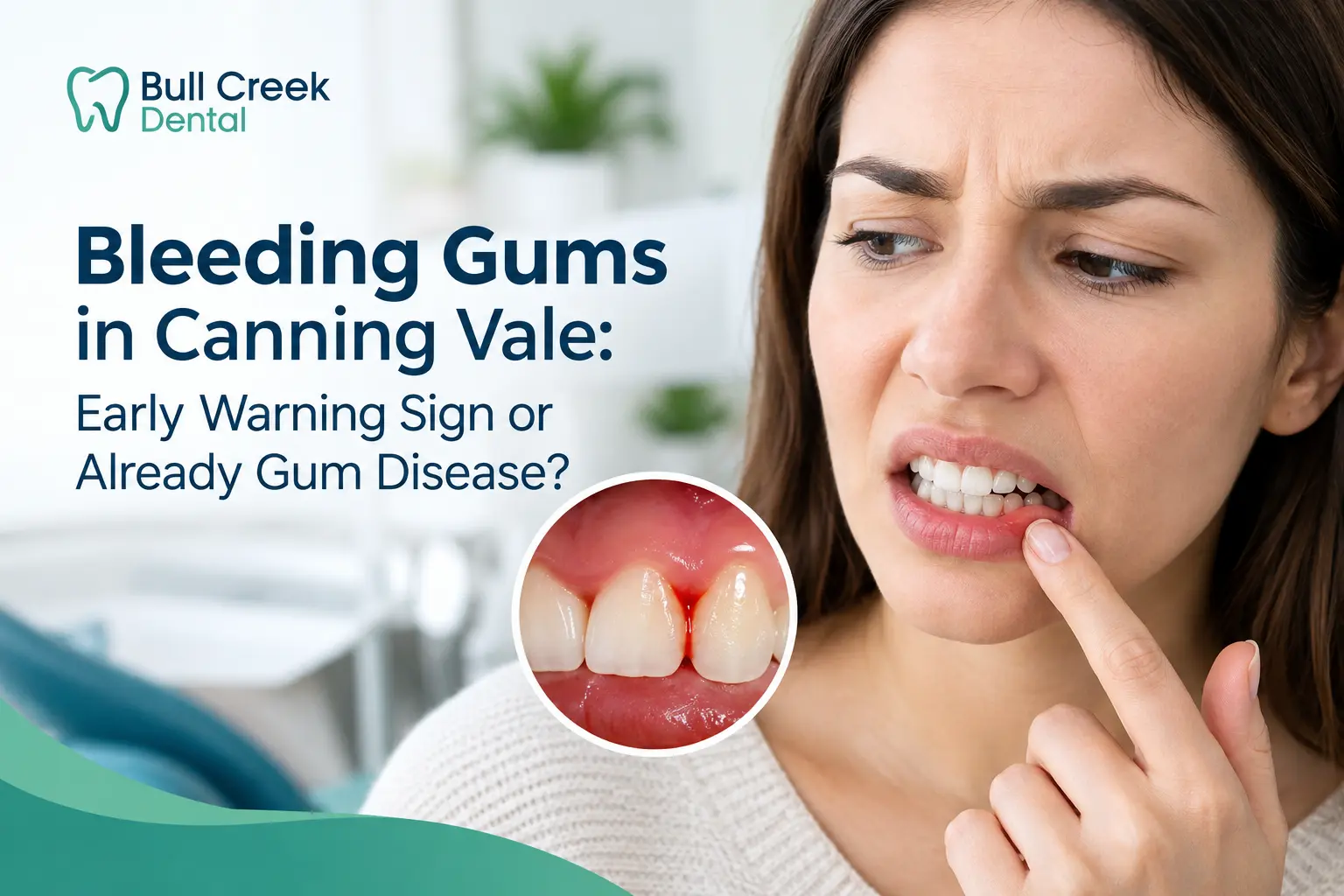
There is a strange rule people apply to gums that they apply to no other body part. If your hands bled every time you washed them, you would see someone this week; when gums bleed with brushing, most people change nothing and hope it settles. Here is the uncomfortable truth: healthy gums do not bleed. Pink in the sink is your gums reporting inflammation, and the only real question is how far along that inflammation is.
Plenty of the patients who ask us about bleeding gums, Canning Vale families included, arrive relieved to learn how fixable the early stage is; a smaller number arrive a few years too late for the easy version. This guide explains the difference, where the line between them sits, and what actually reverses the problem, drawing on the same gum disease treatment approach we use every day at the practice.
Gums bleeding, swollen, or sore right now? Book your appointment today or call 08 9332 3608.
The Short Answer
Bleeding gums almost always mean gingivitis: plaque bacteria sitting along the gum line, inflaming the tissue until it bleeds at the lightest touch. At this stage, no permanent damage has occurred, and the condition is fully reversible with a professional clean and better home care. Left alone, gingivitis can progress to periodontitis, where the inflammation moves below the gum line and starts destroying the bone that holds your teeth; that stage is treatable but not reversible. Healthdirect’s gum disease guidance draws exactly this line, and everything about your outcome depends on which side of it you are on.
Gingivitis or Periodontitis: Reading the Signs
You cannot diagnose yourself precisely at home, but the pattern of symptoms tells a story:
- Likely still gingivitis: bleeding with brushing or flossing, gums that look red or puffy along the edges, mild tenderness, and breath that is not quite fresh. Teeth feel normal and firm.
- Warning signs of periodontitis: gums pulling away from teeth so they look longer, persistent bad breath that cleaning does not fix, a changing bite, gaps opening between teeth, pus at the gum line, or any tooth that feels even slightly loose. These need prompt professional attention, not a new toothbrush.
The Australian Dental Association’s public guidance at teeth.org.au estimates that a large share of adults have some form of gum disease, and most do not know, because the early stages are painless. Bleeding is often the only memo your gums ever send.
When Bleeding Is Not About Plaque
A few other causes deserve a mention, because the fix differs. Brushing too hard with a firm-bristled brush can injure healthy gums; the solution is a soft brush and lighter technique, not less brushing. Hormonal changes during pregnancy make gums more reactive to even small amounts of plaque, which is why pregnancy gingivitis is so common and why dental checks during pregnancy matter; the condition typically settles after birth, but the plaque driving it still needs removing. Some medications, including blood thinners, make bleeding easier; and occasionally, gums that bleed heavily for no clear reason signal a medical issue that deserves a GP visit. Certain blood pressure and epilepsy medications can also enlarge gum tissue, creating folds that trap plaque and bleed readily. Part of our job is telling these situations apart before treating anything, because the right treatment for one cause is the wrong treatment for another.
Why Smokers and Diabetics Need a Closer Watch
Two groups deserve a special warning, for opposite reasons. Smokers often believe their gums are healthy precisely because they do not bleed; in reality, nicotine constricts the blood vessels in the gums, which suppresses the bleeding while the disease advances underneath. A smoker with non-bleeding gums can be in worse shape than a non-smoker with pink in the sink, which makes professional checks the only reliable monitor. Diabetes runs the risk in both directions: elevated blood sugar feeds gum inflammation and slows healing, while active gum disease in turn makes blood sugar harder to control. If you live with diabetes, treating your gums is part of managing the condition, and your gum checks should be as routine as your other health monitoring.
The Mistake That Makes It Worse
When a spot bleeds, instinct says to leave it alone. With gums, instinct is exactly wrong. Avoiding the bleeding area lets more plaque accumulate, which deepens the inflammation, which causes more bleeding; it is a loop that only tightens. The same goes for masking the problem with strong mouthwash: it freshens the evidence while the cause continues underneath. The counterintuitive fix is to clean the bleeding area gently, thoroughly, and daily; with the plaque gone, most gingivitis stops bleeding within a week or two. Technique matters more than force: a soft-bristled brush angled toward the gum line, small circular strokes, floss or interdental brushes once a day, and no scrubbing. Give that routine a fair fortnight. If the bleeding persists beyond it, tartar has almost certainly formed, and tartar is a professional-clean job, not a willpower one.
What Treatment Actually Looks Like
For gingivitis, treatment is refreshingly simple: a thorough professional clean to remove the plaque and hardened tartar your brush cannot, including our gentle Airflow biofilm cleaning, followed by targeted home-care coaching for the specific spots you are missing. Most patients see the bleeding stop within days of the clean. Established periodontitis needs more: deeper cleaning below the gum line, sometimes across more than one visit, then a structured maintenance schedule to hold the result, because the bone that has been lost does not grow back. Either way, your regular check-up and clean visits are where we catch the relapse before you ever see blood again; our guide on how often to visit the dentist explains the rhythm that suits different risk levels.
Help With Bleeding Gums for Canning Vale Families
Canning Vale is one of the fastest-growing sources of patients at our practice, and the drive up to Bull Creek takes most families under 15 minutes. What you get for the trip: an honest staging of your gum health (gingivitis, early periodontitis, or established disease), measurement of the gum pockets around every tooth so progress is tracked in numbers rather than impressions, treatment matched to the stage rather than a one-size clean, and Saturday and Thursday-evening appointments that fit around work and school runs. Health fund extras generally cover gum treatment items, HICAPS claims are processed on the spot, and our general dentistry team looks after the whole family in one visit block.
Frequently Asked Questions
Why do my gums bleed when I brush my teeth?
Almost always because plaque along the gum line has inflamed the tissue, a condition called gingivitis. Healthy gums do not bleed under normal brushing. Less commonly, hard brushing, pregnancy hormones, or certain medications contribute, which a dental examination can sort out quickly.
Does bleeding mean I already have gum disease?
Bleeding means gum inflammation, which is the first stage of gum disease. The crucial question is whether it is still gingivitis, which is fully reversible, or has progressed to periodontitis, where bone loss has begun. Only an examination with pocket measurements can tell you which, and earlier is always cheaper.
Can gingivitis be reversed at home?
Partly. Excellent daily brushing and flossing can settle mild gingivitis, but hardened tartar cannot be removed at home, and it keeps feeding the inflammation. A professional clean plus improved home care reverses gingivitis fully in most people within a couple of weeks.
When are bleeding gums urgent?
See a dentist promptly if bleeding comes with receding gums, persistent bad breath, pus, a changing bite, or any loose tooth; these suggest periodontitis. Spontaneous heavy bleeding without brushing deserves both a dental and a GP review.
Let’s Get Your Gums Healthy Again
Bull Creek Dental, 1/79 Wheatley Dr, Bull Creek WA 6149, Australia | Get Directions
Phone: 08 9332 3608 | Book an Appointment | Contact Us
Open six days a week, with Thursday evening appointments, complimentary on-site parking, and on-the-spot HICAPS health fund claiming.